
Understanding the Difference Between the Old and New Income Tax Regimes in India
BASICS OF INCOME TAX
Kishna Agrawal
4/1/20262 min read
Introduction to Income Tax Regimes in India
The Indian income tax system has seen significant shifts, particularly with the introduction of the new tax regime. Taxpayers now face a choice between the old and new income tax regimes, each with distinct features that cater to different financial situations. Understanding these differences can help individuals make informed decisions regarding their tax obligations.
Key Features of the Old Tax Regime
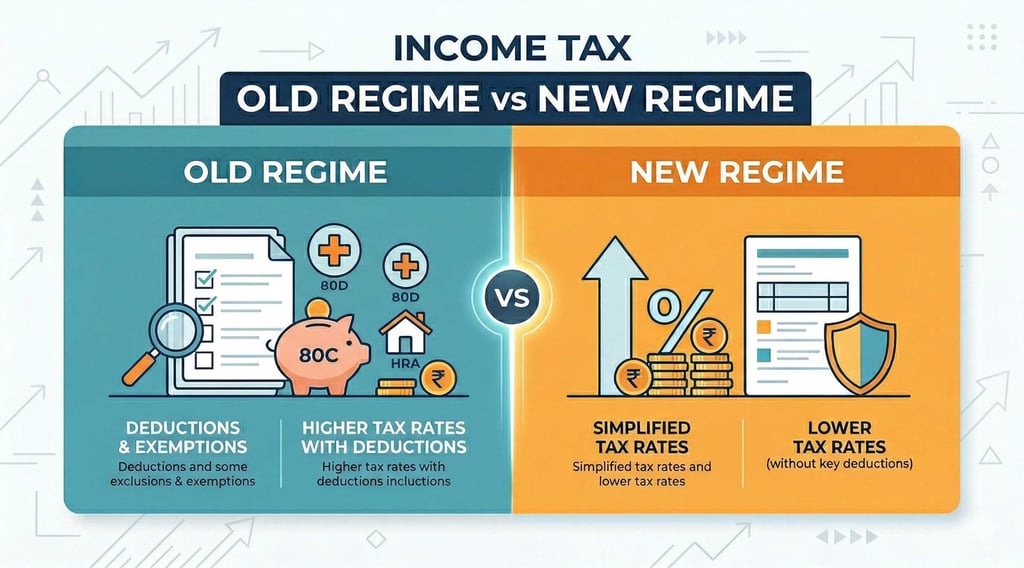
The old income tax regime primarily revolves around a system of tax slabs that offer various exemptions and deductions. Taxpayers can enjoy benefits through investments in specified instruments such as life insurance, Public Provident Fund (PPF), and National Pension Scheme (NPS). Additionally, they can claim deductions under sections like 80C, 80D, and 80E. The tax structure is progressive, meaning that as an individual's income rises, the tax rate applied also increases.
However, this complexity is one of the major criticisms of the old regime, as it requires taxpayers to keep track of numerous exemptions, deductions, and credits to minimize their taxable income. For many, this can lead to confusion and a lack of clarity on their financial standings during filing.
Overview of the New Tax Regime
Launched in the financial year 2020-21, the new income tax regime aims to simplify the tax filing process. Under this regime, taxpayers can opt for lower tax rates but will have to forgo various exemptions and deductions. The tax slabs are significantly lower, which means that individuals may end up paying less tax overall if their deductions in the old regime do not offset the tax savings.
This regime is particularly beneficial for individuals who do not have substantial tax-saving investments or prefer a simpler tax structure. It appeals to a wide spectrum of earners due to its straightforward nature and potential for tax relief, especially for middle-income earners.
Choosing Between the Old and New Regime
When deciding between the two tax regimes, several factors come into play. Taxpayers should consider their investment habits and financial planning styles. Those who regularly utilize tax-saving instruments may find the old regime advantageous, while individuals with fewer deductions might benefit more from the lower rates in the new regime.
It's essential for taxpayers to calculate their tax obligations under both regimes to determine the most beneficial option. For some, the choice may even hinge on changes in income or spending habits, necessitating a regular review of financial strategies.
Conclusion
The choice between the old and new income tax regimes in India reflects the desire for a system that balances simplicity with the potential for tax savings. Understanding the differences ensures that taxpayers can take advantage of the most convenient and financially prudent options available to them. By evaluating their unique financial situations and tax burdens, individuals can make informed decisions that best support their economic health.
Disclaimer: This article is for informational purposes only. Tax laws are subject to change. It is recommended to consult a qualified tax professional or Chartered Accountant for advice specific to your situation.